
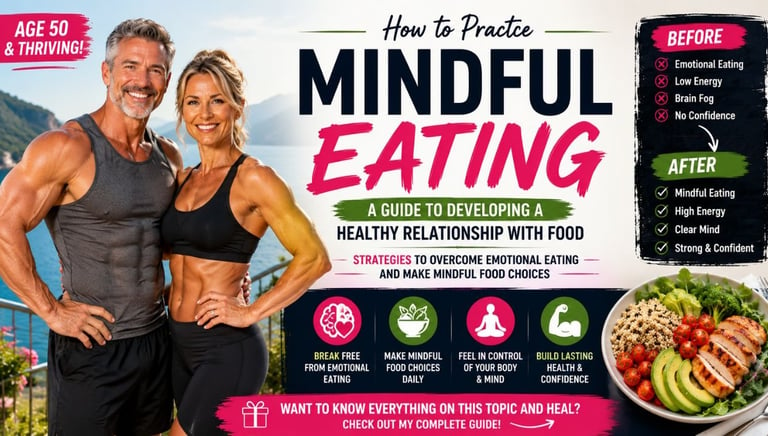
How to Practice Mindful Eating and Finally Build a Healthy Relationship With Food
Strategies to Overcome Emotional Eating and Make Mindful Food Choices
WALKBURN
5/8/20247 min read


How to Practice Mindful Eating and Finally Build a Healthy Relationship With Food
Strategies to Overcome Emotional Eating and Make Mindful Food Choices
You promise yourself this time will be different.
You’ll eat healthy.
You’ll stop snacking late at night.
You’ll stop using food to cope with stress, boredom, loneliness, or exhaustion.
Then life happens.
A stressful day at work.
An argument.
A bad mood.
A moment of overwhelm.
And suddenly you’re standing in the kitchen eating straight from the bag again.
Not because you’re hungry.
Because you’re emotionally drained.
If this sounds familiar, you are not weak. And you are definitely not alone.
Most people don’t struggle with food because they lack discipline. They struggle because they’ve never learned how to truly listen to their body, understand their emotions, or slow down long enough to notice what’s actually happening.
That’s where mindful eating changes everything.
Not another diet.
Not food rules.
Not calorie obsession.
A real, human way to heal your relationship with food.
In this guide, you’ll learn exactly how to practice mindful eating, overcome emotional eating, and make healthier food choices without feeling deprived.
And honestly? This can change far more than your eating habits.
It can change your entire relationship with yourself.
What Is Mindful Eating?
Mindful eating means paying full attention to your food, your body, and your emotions while eating.
Simple. But powerful.
It’s about eating with awareness instead of autopilot.
Most people eat while:
Scrolling their phone
Watching Netflix
Working
Driving
Stressing
Rushing
Thinking about 50 other things
So they miss the signals their body sends.
They don’t notice hunger.
They don’t notice fullness.
They don’t notice emotions driving cravings.
Mindful eating helps you reconnect with those signals.
It teaches you to:
Eat when physically hungry
Stop when satisfied
Recognize emotional triggers
Enjoy food without guilt
Feel calm around eating again
And the best part?
You don’t need perfection.
You just need awareness.
Why Emotional Eating Happens
Emotional eating is not really about food.
Food is just the coping mechanism.
The real issue is usually something deeper:
Stress
Anxiety
Loneliness
Exhaustion
Boredom
Sadness
Shame
Emotional overwhelm
Food temporarily comforts the nervous system.
Sugar gives quick dopamine.
Crunchy foods release tension.
Heavy meals create emotional numbness.
For a few moments, it feels better.
Then guilt kicks in.
And the cycle repeats.
This is why diets fail so often.
They focus on controlling food.
Not understanding emotions.
You cannot heal emotional eating by using more restriction.
You heal it by building awareness, compassion, and emotional regulation.
That’s the real breakthrough.
The Hidden Cost of Mindless Eating
Mindless eating affects more than your weight.
It affects your:
Energy
Mood
Confidence
Digestion
Mental health
Self-trust
Hormones
Sleep
And honestly, the emotional damage is often worse.
You start feeling out of control around food.
You lose trust in yourself.
You feel frustrated every Monday when you “start over.”
That constant guilt becomes exhausting.
Mindful eating helps break this cycle by removing shame from the equation.
Because shame never creates lasting change.
Awareness does.
How to Start Practicing Mindful Eating
Let’s make this practical.
Here’s how to begin today.
Not next Monday.
Not after another failed diet.
Today.
Step 1: Slow Down Before You Eat
This sounds simple. But it changes everything.
Before eating, pause for 10 seconds.
Take one deep breath.
Ask yourself:
“Am I physically hungry… or emotionally hungry?”
That single question creates awareness.
Physical hunger usually builds gradually.
Emotional hunger feels urgent.
Physical hunger is satisfied by many foods.
Emotional cravings are usually specific.
Like:
Ice cream
Chips
Chocolate
Fast food
Sugar
You don’t need to judge yourself for emotional eating.
Just notice it.
Awareness is the first win.
Step 2: Remove Distractions During Meals
This is huge.
When you eat distracted, your brain barely registers the experience.
Which means:
Less satisfaction
More cravings later
Easier overeating
Try eating one meal a day without:
TV
Phone
Laptop
Social media
Just you and your food.
At first it may feel uncomfortable.
That’s normal.
Most people use distractions to avoid being present.
But presence is exactly where healing begins.
Step 3: Eat More Slowly
Your body needs time to register fullness.
If you eat too fast, you’ll usually overeat before your brain catches up.
Try this:
Put your fork down between bites
Chew slowly
Notice textures and flavors
Breathe during the meal
You don’t need to eat perfectly slowly.
Just slower than usual.
Even small changes matter.
Step 4: Learn Your Hunger Scale
One of the best mindful eating tools is the hunger scale.
Rate your hunger from 1 to 10.
1 = Starving
10 = Extremely stuffed
The sweet spot?
Try eating around 3–4.
Try stopping around 6–7.
Not starving.
Not painfully full.
Just satisfied.
This helps rebuild trust with your body.
Something many people have lost after years of dieting.
Step 5: Stop Labeling Food as “Good” or “Bad”
This mindset creates obsession.
The more forbidden a food feels, the more power it has over you.
Think about it.
How often do people binge on foods they believe they “shouldn’t” eat?
Exactly.
Mindful eating removes morality from food.
You are not “bad” for eating dessert.
You are not “good” for eating salad.
Food is food.
Some foods nourish your body more.
Some nourish your soul more.
Both matter.
Balance matters more than perfection.
How to Overcome Emotional Eating
Now let’s go deeper.
Because awareness alone isn’t enough sometimes.
You also need strategies.
Real ones.
Strategy 1: Identify Your Emotional Triggers
Start noticing patterns.
When do cravings hit hardest?
Maybe:
After stressful meetings
Late at night
When feeling lonely
After arguments
During boredom
When overwhelmed
Keep a small journal.
Not to count calories.
To understand emotions.
Write:
What you ate
How you felt before eating
How you felt after
Patterns will appear fast.
And those patterns hold the answers.
Strategy 2: Create an Emotional Coping List
Food cannot be your only coping tool.
That’s too much pressure to put on eating.
Create a list of non-food comforts.
Things that genuinely help you regulate emotions.
Examples:
Walking outside
Calling a friend
Journaling
Listening to music
Taking a shower
Deep breathing
Stretching
Reading
Meditation
Dancing
Going to bed early
When emotional cravings hit, pause first.
Ask:
“What do I actually need right now?”
Sometimes it’s not food.
Sometimes it’s rest.
Connection.
Comfort.
Or simply a break.
Strategy 3: Stop Restricting So Much
This one surprises people.
Over-restriction often creates overeating.
When your body feels deprived, cravings intensify.
Your brain starts obsessing over food.
Then eventually you “break.”
And eat everything.
This is not lack of willpower.
It’s biology.
Mindful eating encourages nourishment instead of punishment.
Eat balanced meals.
Eat enough protein.
Eat healthy fats.
Eat fiber-rich foods.
And yes, enjoy treats sometimes too.
Restriction fuels chaos.
Balance creates peace.
Strategy 4: Practice Self-Compassion
This matters more than people realize.
Most emotional eaters are extremely hard on themselves.
The internal dialogue sounds like:
“I ruined everything.”
“I have no control.”
“I’m disgusting.”
“I’ll never change.”
But shame increases stress.
And stress often triggers more emotional eating.
See the cycle?
Instead of attacking yourself, try this:
“I had a hard moment. That doesn’t define me.”
That shift changes everything.
Healing happens faster when compassion replaces punishment.
The Difference Between Physical Hunger and Emotional Hunger
Learning this distinction is life-changing.
Physical Hunger:
Builds gradually
Any food sounds good
Stops when full
Comes from the stomach
Feels calm
Emotional Hunger:
Comes suddenly
Craves specific comfort foods
Feels urgent
Continues past fullness
Often linked to emotions
The goal isn’t to never emotionally eat again.
Sometimes food is comforting. That’s human.
The goal is awareness and balance.
Not perfection.
Mindful Eating Tips for Busy People
Let’s be real.
Life is busy.
You may not have time for candlelit mindful meals every day.
That’s okay.
Here are simple ways to practice mindful eating in real life.
Pause Before Snacking
Even 5 seconds helps.
Ask:
“Am I hungry or stressed?”
That tiny pause interrupts autopilot.
Drink Water First
Sometimes dehydration feels like hunger.
Especially during stressful days.
Eat Protein at Every Meal
Protein helps stabilize energy and reduce cravings.
This makes mindful eating much easier.
Don’t Skip Meals
Skipping meals often leads to overeating later.
Especially at night.
Sit Down to Eat
Avoid eating while standing, driving, or multitasking.
Your brain feels more satisfied when meals feel intentional.
Keep Trigger Foods Out of Immediate Reach
You don’t need extreme restriction.
But environment matters.
Mindless eating becomes easier when tempting foods are constantly visible.
What Mindful Eating Is NOT
Let’s clear this up.
Mindful eating is NOT:
Perfection
Never eating dessert
Counting every calorie
Obsessing over health
Eating “clean” 24/7
Being disciplined all the time
It’s also not another diet disguised as wellness.
Mindful eating is flexibility.
Awareness.
Freedom.
And trust.
Real health includes mental health too.
The Science Behind Mindful Eating
Research shows mindful eating can help:
Reduce binge eating
Lower emotional eating
Improve digestion
Increase satisfaction with meals
Support healthy weight management
Reduce stress around food
Why?
Because mindfulness activates awareness instead of impulsive behavior.
It slows down automatic reactions.
And when you slow down, you make more intentional choices.
That’s powerful.
Healing Your Relationship With Food Takes Time
This is important.
You will not heal years of food struggles overnight.
Some days will feel easy.
Some days won’t.
That’s normal.
Mindful eating is not about being perfect every meal.
It’s about becoming more connected to yourself over time.
Tiny moments of awareness add up.
Every pause matters.
Every mindful choice matters.
Every compassionate response matters.
Progress is happening even when it feels slow.
A Simple Daily Mindful Eating Routine
If you want a practical starting point, try this:
Morning
Eat breakfast without your phone
Notice hunger and fullness
Midday
Pause before lunch
Take 3 deep breaths
Afternoon
Check emotional state before snacking
Evening
Eat dinner sitting down
Slow your pace slightly
Night
Reflect without judgment
Ask: “What did I learn today?”
Simple. Realistic. Effective.
Common Mistakes People Make With Mindful Eating
Let’s help you avoid frustration.
Trying to Be Perfect
Perfection kills consistency.
You do not need flawless eating habits.
You need awareness and repetition.
Using Mindful Eating as Another Diet
If your only goal is weight loss, you may miss the deeper healing.
Mindful eating is about relationship first.
Weight changes may happen naturally later.
Ignoring Emotions
You cannot heal emotional eating without addressing emotions.
Food is rarely the real issue.
Expecting Instant Results
Healing takes time.
Trust the process.
Small changes compound.
What Happens When You Truly Heal Your Relationship With Food
This is the beautiful part.
Food stops controlling your thoughts.
You stop obsessing.
You stop starting over every Monday.
You feel calmer around eating.
You trust yourself again.
You eat dessert without guilt.
You eat vegetables without resentment.
You stop living at war with your body.
And honestly?
That peace is worth everything.
Final Thoughts: You Don’t Need More Willpower
You need awareness.
Compassion.
Presence.
And practical tools that actually work in real life.
Mindful eating is not about becoming perfect.
It’s about becoming connected.
Connected to your body.
Connected to your emotions.
Connected to your needs.
That connection changes everything.
One mindful meal at a time.
Want to Go Deeper?
If you’re ready to fully heal emotional eating, stop binge cycles, and finally build a peaceful relationship with food, I created a complete step-by-step guide that walks you through the entire process in a simple and realistic way.
Inside, you’ll learn:
How to stop emotional eating triggers
Daily mindful eating habits
How to reduce cravings naturally
The psychology behind overeating
Simple food strategies that actually work
How to feel in control around food again
And how to create long-term food freedom without extreme dieting
Because you deserve more than another temporary fix.
You deserve peace with food.
And it’s absolutely possible.
Written by WALKBURN TEAM
Connect
Join us for daily motivation and walking tips
Contact
Subscribe
walk@walkburn.store
© 2025. All rights reserved.