
How to Get 10,000 Steps at Home: The Simple Indoor Walking Plan That Actually Works
Eliminate Weather, Gym, and Space Excuses With This Easy Indoor Walking Routine for Small Living Spaces
Walk Burn
5/6/20267 min read
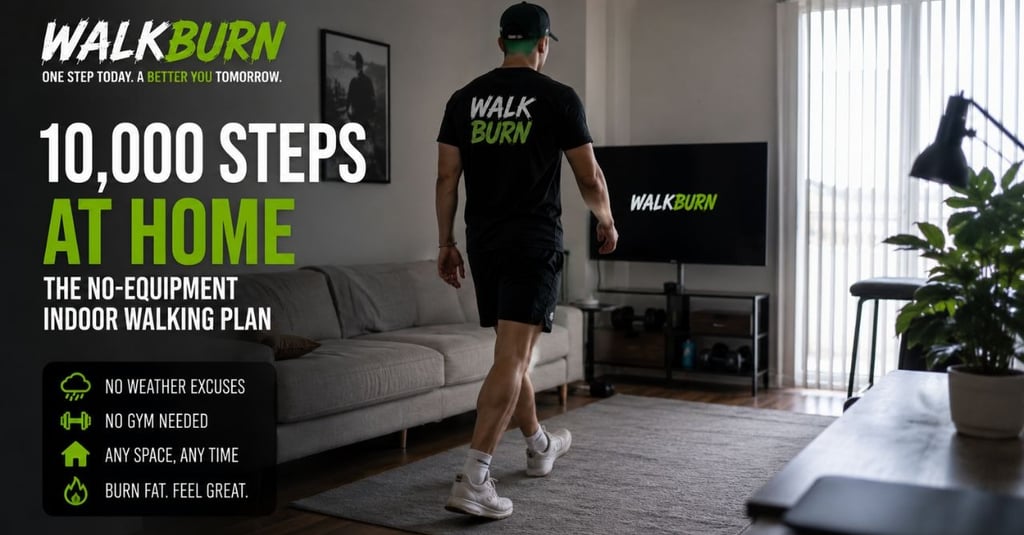
How to Get 10,000 Steps at Home: The Simple Indoor Walking Plan That Actually Works
Eliminate Weather, Gym, and Space Excuses With This Easy Indoor Walking Routine for Small Living Spaces
Rain outside.
Too cold.
Too hot.
No treadmill.
No gym membership.
Not enough time.
Tiny apartment.
Neighbors downstairs.
Most people think these things stop them from walking more.
But the truth is… they don’t.
Because you can absolutely hit 10,000 steps without ever leaving your home.
And once you realize that, something changes.
You stop depending on perfect conditions.
You stop waiting for motivation.
You stop saying, “I’ll start tomorrow.”
You simply start moving.
That’s what this guide is about.
Not extreme workouts.
Not expensive fitness equipment.
Not turning your apartment into a gym.
Just simple, realistic indoor walking that fits real life.
Whether you live in a small apartment, a studio, a tiny house, or just don’t want to deal with weather or crowded gyms anymore, this indoor walking plan can completely change the way you think about fitness.
And the best part?
It works.
People underestimate walking because it feels too simple.
But walking consistently can:
help burn fat
improve energy
reduce stress
improve sleep
support heart health
boost mood
build discipline
and help you finally stay consistent
Not because it’s intense.
Because it’s sustainable.
That’s the secret most people miss.
Why 10,000 Steps Matters More Than You Think
Let’s clear something up first.
You do NOT need exactly 10,000 steps to lose weight or become healthier.
But aiming for 10,000 steps creates a powerful daily target.
It keeps you moving.
And movement changes everything.
The biggest problem today isn’t usually food alone.
It’s inactivity.
People sit:
at work
in cars
on couches
in front of screens
Hour after hour.
The body was never designed for that.
Walking helps reverse it.
And unlike brutal workouts that leave people exhausted after a week, walking is something most people can actually continue doing long term.
That matters more than perfection.
Because consistency beats intensity almost every single time.
The Biggest Lie in Fitness
You’ve probably heard this before:
“You need hard workouts to see results.”
That sounds motivating.
But for most people, it creates failure.
Why?
Because extreme routines create extreme resistance.
And resistance leads to quitting.
That’s why so many people:
start Monday
feel motivated for three days
go too hard
burn out
stop completely
Walking is different.
Walking feels manageable.
And manageable habits are the habits people actually keep.
That’s why indoor walking can quietly become one of the most powerful fat-loss and health tools available.
Can You Really Get 10,000 Steps Indoors?
Absolutely.
In fact, many people are shocked when they realize how quickly steps add up at home.
A small living room is enough.
A hallway is enough.
Even pacing around your kitchen counts.
Movement is movement.
You don’t need:
a treadmill
a giant house
perfect weather
expensive shoes
fitness classes
You just need consistency.
That’s it.
The Mental Shift That Changes Everything
Most people think exercise starts when:
they drive to a gym
put on special clothes
follow a complicated routine
But movement doesn’t have to be formal.
Walking while:
listening to music
watching TV
talking on the phone
cleaning the house
waiting for food to cook
…still counts.
This mindset shift is huge.
Because once you stop separating “exercise” from daily life, movement becomes easier.
And easier means repeatable.
How Many Calories Can Indoor Walking Burn?
This depends on:
body weight
pace
walking duration
intensity
But indoor walking can absolutely support fat loss.
Especially for overweight beginners.
A person carrying extra body weight often burns more calories while walking than they realize.
And unlike exhausting workouts that increase recovery stress and hunger, walking is sustainable enough to repeat daily.
That’s what creates results over time.
Not one perfect workout.
Repeated movement.
The Best Indoor Walking Setup
You don’t need much.
Seriously.
Here’s all you really need:
comfortable clothes
supportive shoes
water
a phone or TV for entertainment
enough floor space to walk safely
That’s it.
No equipment required.
Small Space? No Problem
One of the biggest excuses people use is:
“I don’t have enough room.”
But you don’t need a giant area.
You can:
walk in place
pace back and forth
march during commercials
loop around furniture
use a hallway repeatedly
Some people even hit 10,000 steps in tiny studio apartments.
The key isn’t space.
The key is repetition.
The Beginner Indoor Walking Plan
If 10,000 steps sounds impossible right now, relax.
You do NOT need to start there.
That’s another mistake people make.
Starting too aggressively.
Instead, build momentum.
Week 1 Goal:
Aim for:
3,000 to 4,000 steps daily
Week 2 Goal:
5,000 to 6,000 steps
Week 3 Goal:
7,000 to 8,000 steps
Week 4 Goal:
10,000 steps
Slow progress is still progress.
Actually, slow progress is usually the progress that lasts.
The Secret to Hitting 10,000 Steps Without Feeling Miserable
Don’t do it all at once.
Break it up.
This changes everything psychologically.
Example:
2,000 steps in the morning
2,000 after lunch
2,000 while watching TV
2,000 during phone calls
2,000 in the evening
Done.
Much easier.
This approach removes overwhelm.
And overwhelm kills consistency.
Indoor Walking Routines That Don’t Feel Boring
A lot of people quit walking because they think it’s boring.
That’s usually because they’re trying to “exercise.”
Instead, make walking part of your life.
Here are some easy ways:
1. TV Walking
Walk during:
Netflix
YouTube
sports games
commercials
You’ll be shocked how quickly steps add up.
2. Music Walking
Create a playlist that makes you want to move.
Music changes energy instantly.
3. Podcast Walking
Use walking time to:
learn
relax
laugh
escape stress
4. Phone Call Walking
Never sit during calls.
Walk instead.
5. Timer Walking
Set a timer every hour.
Walk for 5 minutes.
Small bursts become massive progress over time.
The Power of Walking After Meals
This habit alone can change your health.
A short walk after meals may help:
digestion
blood sugar
energy
cravings
Even 5–10 minutes matters.
Simple habits create big changes when repeated consistently.
Why Indoor Walking Is Perfect for Overweight Beginners
Many overweight people avoid gyms because they feel:
embarrassed
intimidated
uncomfortable
judged
Indoor walking removes all of that.
No pressure.
No audience.
No comparison.
Just movement.
And honestly?
That’s where confidence begins.
Not with perfection.
With action.
Walking Builds More Than Fitness
This is important.
Walking daily doesn’t just change your body.
It changes your identity.
Every walk becomes proof that:
you showed up
you kept your promise
you didn’t quit
Those small wins matter more than people realize.
Because confidence is built through action.
Not motivation.
How to Stay Consistent With Indoor Walking
Consistency is the real challenge.
Not knowledge.
Most people already know movement is healthy.
The problem is maintaining it.
Here’s how to make indoor walking stick.
1. Make It Easy
The harder something feels, the less likely you’ll continue.
Keep it simple.
2. Remove Friction
Have shoes ready.
Keep a walking area clear.
Reduce excuses.
3. Attach Walking to Existing Habits
Walk:
after coffee
after meals
while watching TV
during calls
This builds automatic routines.
4. Stop Chasing Motivation
Motivation fades.
Systems remain.
5. Focus on Showing Up
Not perfection.
Not speed.
Just showing up.
What Happens After 30 Days of Indoor Walking?
Many people notice:
improved mood
more energy
better sleep
reduced stiffness
weight loss
improved confidence
But the biggest change is often mental.
You stop feeling stuck.
And once that happens, momentum grows.
Common Mistakes to Avoid
1. Starting Too Hard
Don’t jump from 2,000 to 15,000 steps overnight.
Build gradually.
2. Waiting for Motivation
Action creates momentum.
Not the other way around.
3. Thinking Walking “Isn’t Enough”
Walking consistently is far more effective than extreme routines you quit after a week.
4. Comparing Yourself to Others
Your only goal:
move more than before.
That’s it.
5. Missing One Day and Giving Up
One missed day means nothing.
Quitting completely is the problem.
Indoor Walking for Busy People
One reason indoor walking works so well is flexibility.
You can do it:
early morning
late at night
during work breaks
while cooking
while watching your kids
No travel time.
No gym commute.
No waiting for equipment.
That convenience matters.
The Truth About Fat Loss
People love complicated answers.
But fat loss usually comes down to:
consistency
movement
nutrition
patience
Walking supports all four.
It burns calories.
It reduces stress.
It improves routine.
And it’s sustainable.
That combination is powerful.
Walking and Mental Health
Indoor walking can also become a mental reset.
Especially during stressful periods.
Movement often helps:
anxiety
overthinking
low energy
emotional eating
Sometimes a walk changes your entire mood.
Not magically.
Biologically.
Your body was built to move.
The Best Time to Walk Indoors
The best time is the time you’ll actually do it.
Some people love mornings.
Others prefer evenings.
There is no perfect schedule.
The perfect schedule is:
consistent movement.
What If You Miss Your Step Goal?
Nothing terrible happens.
Seriously.
Don’t turn fitness into punishment.
If you hit:
4,000
6,000
8,000
…that’s still movement.
Still progress.
Still better than sitting all day.
The all-or-nothing mindset destroys more progress than bad workouts ever will.
Indoor Walking and Weight Loss Plateaus
Many people hit plateaus because:
they stop moving
they become inconsistent
they expect instant results
Walking helps maintain momentum.
And momentum matters.
Sometimes consistency breaks plateaus better than intensity.
Why Walking Is So Underrated
Because it’s not flashy.
That’s honestly the reason.
People underestimate simple habits.
But:
walking
sleeping better
drinking water
eating slightly better
…done consistently can completely transform a person over time.
The Real Goal Isn’t 10,000 Steps
This might surprise you.
The real goal isn’t actually the number.
The real goal is becoming someone who moves daily.
Someone who:
doesn’t quit
values consistency
takes care of themselves
That identity shift changes everything.
Your 7-Day Indoor Walking Challenge
Want an easy way to start?
Try this:
Day 1:
3,000 steps
Day 2:
4,000 steps
Day 3:
5,000 steps
Day 4:
6,000 steps
Day 5:
7,000 steps
Day 6:
8,000 steps
Day 7:
10,000 steps
Remember:
you don’t need perfection.
You just need movement.
Final Thoughts: Stop Waiting for Perfect Conditions
You don’t need:
sunshine
a gym
expensive equipment
fancy routines
perfect motivation
You just need to begin.
Inside your home.
With the space you already have.
That’s the beauty of indoor walking.
It removes excuses.
And when excuses disappear, progress finally becomes possible.
So if you’ve been waiting for:
better weather
Monday
motivation
confidence
Stop waiting.
Start walking.
One step becomes another.
Another becomes a habit.
And habits change lives.
Even inside the smallest apartment.
Even with no equipment.
Even starting today.
Written by WalkBurn Team
Connect
Join us for daily motivation and walking tips
Contact
Subscribe
walk@walkburn.store
© 2025. All rights reserved.